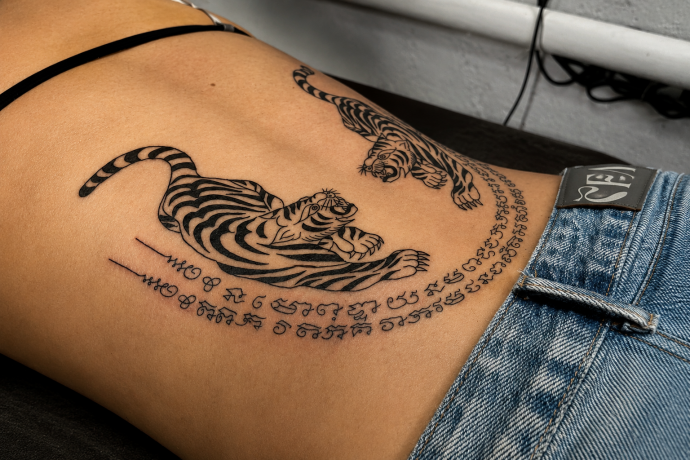
Sak Yant Tigers (Suea Sak Yant) are among the best-known and most recognizable images in the Sak Yant tradition. This design is widespread in the Thai tradition and, for many generations, has remained one of the most sought-after choices among people who want to emphasize strength of character, inner resolve, leadership qualities, and the ability to move confidently toward their goals.
The Thai word “Suea” means “tiger.” Depending on the composition, the image may contain one or two tigers and may also be accompanied by traditional Pali texts and sacred geometry.
What Sak Yant Tiger Means
The tiger holds a special place in the cultures of Southeast Asia. It symbolizes physical strength, determination, leadership qualities, and the ability to overcome obstacles.
The meaning of Sak Yant Tiger is therefore most often associated with the following qualities:
- self-confidence;
- decisiveness in making decisions;
- leadership qualities;
- inner discipline;
- persistence in achieving goals;
- the ability to protect oneself and one's loved ones.
This is why images of tigers are often chosen by entrepreneurs, athletes, military personnel, people in creative professions, and those whose work demands intense concentration and constant progress.
Two Sak Yant Tigers
One of the best-known versions is a composition featuring two tigers facing each other. This design belongs specifically to the Thai Sak Yant tradition.
The two tigers symbolize strength, leadership, control over one's own decisions, and the ability to maintain a balance between inner power and responsibility for one's actions.
Today, this version is considered one of the most recognizable of all Sak Yant images and is often tattooed on the back or shoulders.
Tigers in the Thai and Khmer Traditions
Despite their shared symbolism, there are certain differences between the Thai and Khmer traditions.
Sak Yant Tigers (Suea Sak Yant) became most widespread specifically in the Thai tradition. The composition with two tigers is a Thai design and is considered one of the best-known forms of this yant.
Historically, a single tiger was used in the Khmer tradition. For this reason, the classic two-tiger version is not a traditional Khmer form.
There are different schools, styles of execution, and ways of writing the texts, but this distinction remains one of the most noticeable differences between the two traditions.
Are Tigers Suitable for Everyone?
Today, almost anyone can choose an image of tigers, and many masters are willing to create such a design at a client's request. However, the traditional approach to this symbol has always gone much deeper.
The tiger is considered a symbol of strength, leadership, responsibility, and inner resolve. This is why some believe that this symbol is far from suitable for everyone and should not always be a person's first Sak Yant.
The main misconception is that someone sees a powerful image and automatically assumes that the symbol suits them. In practice, the question is not only about choosing a design but also about whether the person is ready to carry the symbolic weight associated with it.
A person cannot carry every burden. Sometimes people seek to take on more than they are currently ready to bear. Something similar can be said of certain Sak Yant symbols. Without a foundation for growth, inner discipline, and personal resolve, a person is trying to take on something they are not yet ready for.
For this reason, some masters follow a gradual approach. Personally, I never tattoo tigers as someone's first Sak Yant. If a person comes specifically for this image, I prefer to decline and suggest starting with other forms. This is my personal opinion, based on many years of practice and an understanding of the tradition.
Of course, every master has their own view on this issue, and the final decision always rests with the person.
Where Sak Yant Tigers Are Placed
The most common placements are:
- the upper back;
- the area between the shoulder blades;
- the chest (traditionally for men only);
- the shoulder;
- the thigh;
- the side of the torso.
The size of the composition depends on the chosen design and the number of details. There are both large compositions covering the entire back and small works with fine detail and many elements.
Conclusion
Sak Yant Tigers remain one of the best-known symbols of the Thai tradition. People choose them for their striking appearance, deep symbolism, and association with qualities such as strength, discipline, leadership, and responsibility.
At the same time, the traditional approach involves not only choosing a beautiful image but also understanding why this particular symbol suits a particular person. This is why many experienced masters recommend making a considered choice when selecting tigers and viewing them as more than just an impressive design.