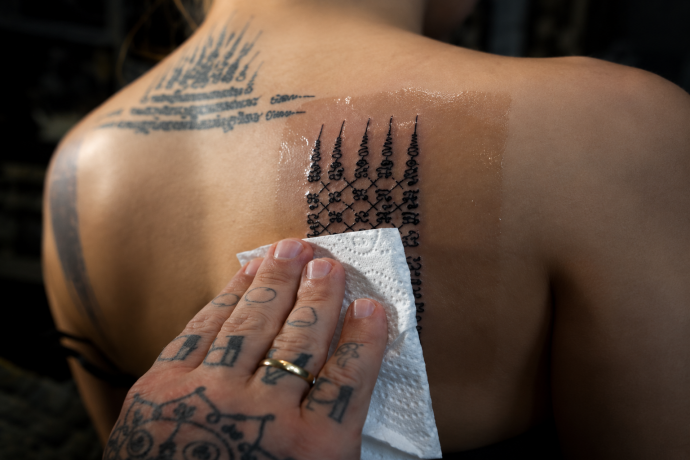
How to Care for Sak Yant After Tattooing
Proper aftercare following a Sak Yant session affects both the healing process and the appearance of the work months and years later. Whether the design was created using a traditional manual method, handpoke or a machine, the skin needs time to recover and gentle care during the first few weeks after tattooing.
Immediately after the session, the tattooed area may be slightly red and sensitive. This is the skin’s natural reaction to the tattooing process.
When working with a machine, I also apply specialist professional tattoo products after the session to help reduce skin redness and the release of lymph fluid during the first hours after the procedure.
With traditional manual Sak Yant tattooing, this fluid discharge is usually much less pronounced or absent altogether. This is due to the nature of the method: the area of skin injury is smaller, and its effect on the tissues differs from that of modern machine tattooing.
How Sak Yant Heals
Sak Yant created using the traditional manual method generally heals a little faster and with less discomfort than most modern machine tattoos. This is related to the application technique and the way it affects the skin.
When aftercare recommendations are followed, recovery usually proceeds smoothly and predictably. However, healing speed always depends on individual factors, the size of the work, its location and the overall condition of the skin.
What Is Considered Normal After a Session?
- Slight skin redness.
- Mild sensitivity around the design.
- A small amount of lymph fluid during the first hours after machine tattooing.
- Light peeling after a few days.
- Mild itching as the skin recovers.
All these processes are part of natural healing.
Sak Yant Aftercare During the First Few Days
The First 24 Hours
Follow your artist’s recommendations about the protective dressing or film. After removing it, gently wash the tattooed area with warm water and a mild, neutral soap.
Do not rub the skin with a washcloth or towel, or use harsh antiseptics unnecessarily.
Moisturizing the Skin
After cleansing, apply a thin layer of the recommended healing product.
The skin should remain clean and moderately moisturized. In most cases, a small amount of any panthenol-containing product applied once a day before bed is enough. Excessive amounts of creams and ointments do not speed up healing and are usually unnecessary.
What to Avoid After Sak Yant
Avoid Overheating
- Bathhouses.
- Saunas.
- Hot baths.
- Steam treatments.
High temperatures can increase skin irritation and slow recovery.
Avoid Swimming Pools and Open Water
During active healing, it is recommended to avoid prolonged immersion in water, especially in pools, rivers, lakes and the sea.
Do Not Sunbathe
Direct sunlight can have a negative effect on a fresh tattoo. Until the skin has fully recovered, it is recommended to avoid intense tanning and tanning beds.
Do Not Scratch the Skin
Itching may occur during healing. Do not pick at peeling skin or scratch the tattooed area, as this can affect how evenly it heals.
The Stages of Sak Yant Healing
Days 1–3
Redness gradually subsides. The skin may remain mildly sensitive.
Days 4–10
Light peeling appears. The skin begins to recover actively.
Weeks 2–4
The work looks almost healed on the surface, but the skin’s internal recovery processes are still continuing.
Up to 6–8 Weeks
The skin completes its recovery, and the appearance of the work stabilizes.
Aftercare for Handpoke Sak Yant
Many Sak Yant designs are created by hand, including modern handpoke versions. Despite differences between techniques, the basic aftercare recommendations remain the same.
Many people report that the traditional manual method and handpoke are gentler, with a less uncomfortable recovery period than machine tattooing. At the same time, the quality of healing always depends on the artist’s experience, the characteristics of the skin and adherence to aftercare recommendations.
- Keep the skin clean.
- Avoid injuring the tattooed area.
- Avoid prolonged soaking.
- Keep the work out of the sun.
- Use the recommended aftercare products.
When these rules are followed, handpoke healing usually proceeds smoothly and predictably.
When to Contact Your Artist
If you have questions about recovery or notice unusual symptoms, it is best to contact the artist who did the work. An individual consultation will always be more useful than general advice from the internet.
Conclusion
Sak Yant aftercare does not require complicated procedures, but it does require attention and adherence to recommendations during the first few weeks after the session. Keeping the skin clean, moisturizing moderately and treating the tattooed area gently help it heal well and preserve the appearance of the work for years to come.
Traditional Sak Yant and modern handpoke versions usually heal a little faster and with less discomfort than most machine tattoos. However, the final result always depends on the artist’s qualifications, the characteristics of the skin and proper aftercare.